Background InformationHow did Vlad the Impaler get his Name?Vlad the Third is also known by different names such as Vlad Tepes (Vlad the Impaler) and Vlad Dracula. The name Vlad Tepes was a Turkish nickname which was written as Kaziklu Bey which translates to the Impaling Prince. This nickname was used by Ottoman chroniclers in the late 15th and 16th century due to Vlad Dracula’s fondness of impalement as a means of execution (Miller, Vlad the Impaler; Brief History, 2005). Though there is no evidence which shows that Vlad himself ever referenced himself as such, there were a number of occasions that were noted in several primary sources which suggested that he did denote himself as Dracula (linguistic variation) in letters and documents that still remain in Romanian museums in letters and documents that he wrote (Miller, Vlad the Impaler; Brief History, 2005). Family Vlad the Third had descended from a chaotic family as his father was an illegitimate child to the most famous Basarab, Mircea cel Batrin or also known as Mircea the Old. Mircea the Old was notorious for his struggles against the Ottoman Empire (Miller, Vlad the Impaler; Brief History, 2005). When Mircea passed away in 1418, he left illegitimate children, therefore showing no clear idea of who would succeed in his position as Voivode of Wallachia. There continued to be conflict between Mircea’s illegitimate son; Vlad Dracul (Vlad’s father) who was born in approximately 1390 and Dan who was the son of Mircea’s brother. The Dracullesti-Danesti feud that played a large role in that era was born from then onwards (Miller, Vlad the Impaler; Brief History, 2005). Dracula's Father In 1431, Vlad Dracul was newly stationed as a military commander of Transylvania that year by King Sigismund, responsible for guarding mountain passes from Transylvania to Wallachia in case of enemy incursion(Snell, 2014). Though not confirmable, primary and secondary sources found have stated that Vlad the Third was also born that year on November or December at Sighisoara, Romania (Linke, 2010). Vlad Dracul (Dracula’s father) also became inducted into the Order of the Dragon which was founded in 1410 by Sigismund the Holy Roman Emperor as he demanded all members to defend Christianity and resist Ottoman Turks as they were Muslims (Krystek , 2011). It was said that Vlad Dracul was not content with his position as governor and therefore gathered supporters in order to seize power from the Danesti prince; Alexandru I. in 1436, Vlad Dracul succeeded and became Vlad the Second after murdering Alexandru(Linke, 2010). Vlad Dracul (Vlad II) made a political mistake as he attempted to find a middle ground between his two neighbours as they were both very powerful and struggled to keep his position for six years. He was still a member of the Order of the Dragon and vowed to fight the infidel (who at the time were the Turks) whilst also a vassal of the King of Hungary. He acted like this due to the Ottomans power and their unstoppable motions. Eventually, Vlad Dracul was forced to compensate with tributes to Sultan like his father had (Linke, 2010). Early Childhood Little is known about Vlad Dracula’s early childhood though through different methods, the conclusive data shows his mother to be Cneajna who was from a Moldavian princely family. Dracula was the second of three sons where his older brother was named Mircea and his younger sibling named Radu. It is told that his family remained in Sighisoara until 1436 when they moved to Targoviste where Vlad Dracul became the Voivode of Wallachia (Miller, Vlad the Impaler; Brief History, 2005). Dracula received training appropriate for knighthood at court until he and his younger brother, Radu, were confined in Turkey (Adkins, 2000). Here, there are mixed interpretations whether his father had sent them as a tribute of Dracul’s reliability and support or they had been taken as captives and imprisoned. For example, in (Adkins, 2000), the author wrote that Dracula was seized and thrown into prison whereas another author reflected on the event as Dracul passing Dracula and his youngest son, Radu to the Turks (Miller, Vlad the Impaler; Brief History, 2005). The many sources have fought against what truly happened though, despite whether or not he was passed over to captured, Dracula still faced the same psychological damage. Hostage Life As they were princely hostages they were treated and educated very well where they came across no physical harm. It is told that Radu had thoroughly enjoyed the Turkish lifestyle where he befriended the future Sultan and fared much better than Dracula pushing the hatred and rivalry between them further (Miller, Vlad the Impaler; Brief History, 2005). Dracula was a quick learner though defiant and cold where he was even feared by his teachers and guards. At this time, Dracul (Vlad II) joined the Sigismund’s war chief, John Hyunyadi and attacked the Turkish (Adkins, 2000). Though Dracul and his first son, Mircea fought very fiercely, Hyunyadi was suspicious of them and trapped both of them in the dismal Wallachian marshes in 1471. There, he murdered Dracul fast and blinded Mircea with hot iron stakes and buried him alive. Dracula suffered psychologically to an unassessed severity and left his place as hostage after hearing of his fathers’ death whilst Radu decided to stay (Adkins, 2000). At leaving, he discovered news of his older brothers’ death by boyars of Targoviste. Vlad continued on to learning political manoeuvring, military tactics and the duties of a prince(Adkins, 2000). Law and OrderVlad Dracula definitely wasn’t the kindest nor most forgiving, though he did what he could in order to get the job done, disregarding the severity of wrongdoings. His modes of action would never be accepted in the eyes of those in the 21st century, but in their time period, he was a saviour. In the era in which Vlad Dracula lived in, life was extremely cheap and short (Adkins, 2000). Half the European population had been swept away by the Black Death so much so that each sunrise could bring disease, ravaging soldiers, hunger and slavery about. Loss of life was unimportant and people abandoned their morals and beliefs as they became bitter and protected themselves grasping for any moment of pleasure even at the expense of other people. Rulers were uneasy and feared betrayal from all sides (Adkins, 2000). Vlad Dracula himself had experienced much pain since childhood as he grew up being betrayed by his father; whether he was either presented or captured by the Turkish, his father’s apparent abandonment to probable and expected torture and death (Adkins, 2000). The addition of being betrayed by his brother, Radu as he joined the opposition and plotted the uprising of his throne and desertion from his best friend, Stephen joined his enemies and oral history has shown that Vlad had escaped death and fled to the new king of Hungary and yet again was imprisoned and mislead, thus creating the person that Dracula had become where kindness meant weakness and acting without mercy with swift and horrific lessons would be remembered far longer than compassion (Adkins, 2000). His favourite method of putting someone in their place was impalement, though it was not his only method. He also employed other cruel and callous approaches such as; nails in the head, limbs being cut off, blinding, burning, mutating sexual organs (more commonly in women), strangulating, cutting off noses and ears, skinning, burning alive, scalping and exposure to elements or wild animals (Linke, 2010). His vision of ‘Law and Order’ was rather extreme and examples of his vision are displayed almost perfectly through a specific nine anecdotes that is known universally throughout literature (Linke, 2010). These nine anecdotes derived from short accounts of people who saw or heard of Vlad Dracula as a man and have been found in all information that pertains to him. One of these anecdotes for example told a story of one day when Vlad Dracula assembled the beggars, cripples, folk with diseases to a feast for the poor. After a hearty meal, he questioned them; “would you like me to make you free of all earthly troubles?” where he had been greeted by a loud cheer. That day, they were all locked in and burned to death as the hall fell to the ground (Adkins, 2000). True, he had just murdered supposedly innocent men, women and children though his underlying and inexplicit values were almost deemed as an attempt for purity and a new start for Wallachia. It was filled with the vehemently hostile people who scoured the filthy grounds was most definitely filled with hatred and wrongdoings during that time. His view towards those beggars would be of distaste as they continuously pleaded for more and more though never gave back or worse yet, stole. Vlad Dracula held very high standards through everything he did, but all that he requested was truth and respect – this was seen in his nine anecdotes; a visiting merchant reported lost money and Dracula confidently promise amends. He threatened to burn the entire town to the ground and the thief was quickly found. Adding an extra coin to the pocket, he tested the sincerity and honesty of the merchant as he too would be impaled along with the thief immediately if he had hidden the extra coin (Adkins, 2000). Agreeably, his mode of ‘teaching them a lesson’ would be classified as unwarranted and excessive though, it is still hard to find dissent in this argument, which is argued particularly strongly throughout many sources reflecting ideas of Dracula’s ability to truly reduce crime rates within his ruling area. In commemoration of his successfulness in reducing crime rates, Dracula placed a golden cup at the city fountain in Targoviste for any passer-by to drink from gold. It was never touched let alone stolen as said in another anecdote (Linke, 2010). This information is reliable throughout despite the quality of the source -due to it being a secondary source- as it is found and well known throughout almost all sources, and is shows the obvious, explicit idea of Dracula’s nastiness and cruelness though, it underlays an implicit idea that he was a man of great integrity. Finally, there have been few Romanian oral narratives passed down through generations specifically identifying Vlad’s accomplishments in maintaining law and order in what was a very disordered and lawlessly time (Miller, Vlad the Impaler; Brief History, 2005). Wallachian peoples’ hearsay may not have the integrity of any other primary source and may be objective to truth from constant retelling of the stories as it may have caused many misinterpretations though, it still provides insight of the ideas of his own people. Turkish-led Ottoman Empire WarDespite his horrific methods of fighting back, he still successfully pushed back the Turks by instilling power and fear into them. The Turkish feuds against Wallachia were consistent throughout many years. Murmad’s son; Mehmed II demanded annual gold and Wallachian soldiers to become a part of the Sultan army in recognition of Mehmed’s power (Adkins, 2000). Vlad Dracula then followed on later by dispatching a full-scale attack against the Turks on the Danube River. Vlad’s attack was extremely risky though, it was imperative in the interests of Christians. Standing between the rest of Christian Europe and the invading Islam forces was only Transylvania(Snell, Vlad Dracula - A Concise Bibliography, Page Two, 2014).Though the importance of Christianity and Vlad's role in being a defender was not certain, the hatred that Vlad had towards the Turkish was unchallenged (Snell, Vlad Dracula - A Concise Bibliography, Page Two, 2014). Vlad used guerrilla tactics in order to succeed in several victories despite being greatly outnumbered. It was told that due to the rebellion of Vlad Dracula towards the Turkish, Sultan Mehmed II decided to punish him (Snell, Vlad Dracula - A Concise Bibliography, Page Two, 2014). Little did they know that as Mehmed the Second drew the Turk’s deeper into the Wallachian territory, Vlad had already planned against the invaders leaving no resources behind him; burning down villages and poisoning wells. In due time the Turkish along with Mehmed the Second finally arrived at the capital city where they were met face-to-face with an enormous stench (Snell, Vlad Dracula - A Concise Bibliography, Page Two, 2014). A stench whipped their faces as they met with an approximate twenty thousand Turkish captives of men, women and children that were impaled on a field of stakes more than two miles long in the land that is now called “Forest of the Impaled” (Snell, Vlad Dracula - A Concise Bibliography, Page Two, 2014). The Turks retreated at that time as they feared the horrific possibilities of their death. Yes, he sacrificed many lives and resources, though isn’t the end result important? It is true that some Turkish chronicles have emphasised the horrors that Dracula had brought about and inflicted on enemies. This was further emphasised in the battles of 1461 an 1462 (Miller, Vlad the Impaler; Brief History, 2005). The German’s also wrote tales of Vlad Dracula during that time and were one of the most influential towards the public views of him. In one of the German woodcut pamphlets from the 15th century, was restored and rendered into a legible picture. This image is translates into discussing gruesome details of what Vlad had done for example; piercing people with poles, burning them, eating them and was indiscriminative towards who he hurt as he also tortured (including women, children and young babies). Another quote; Hie facht sich an gar ein graussenliche erschöckenliche hystorien von dem wilden wütrich Dracole wayde. Wie er die leut gespist hat. Und gepraten. (Nürnberg 1499), translated to "He had some of his people buried naked up to the navel and had them shot at, he also had some roasted and flayed,” (Snell, Woodcut from a German Pamphlet, 2014). These sources have all shown how distasteful Vlad Dracula and showed no underlying inexplicit ideas and suggests that Vlad the Second was a rampaging beast. Though, this information is extremely opinionated as the Germans were often victims of Vlad’s incursions and many of the pamphlets and drawings were out of popularity. The Turkish views were very subjective as they downplayed Vlad’s military successes and wrote in their point of view as Vlad’s enemies (Miller, Vlad the Impaler; Brief History, 2005). Some oral narratives that had been passed down to new generations from Romania can be classed as a primary source for these events that Dracula had been found in. these oral narratives had been preserved by the village near the ruins of his fortress. These tales told of Vlad Dracula passionately protecting his homelands from the Turks when just about every other principality in the region were subject to the Ottoman rule and gave up their own citizens. Russian narratives from that time were generally unbiased to the situation and wrote of Vlad being a folk hero that endeavoured to save his people from the Turks and treacherous boyars (Miller, Vlad the Impaler; Brief History, 2005). Yet again, the Romanian oral narratives may have been interpreted differently, forgotten and confused over the years of passing down though can still be used as insight into how he was viewed despite his cruel nature thus showing him to be more than his actions. ConclusionTo conclude, Vlad Dracula has been hated by many and received the name Vlad the Impalerdue to his immoral actions. To some, he will always be remembered as a capricious and exceptionally cruel ruler that has made no positive impact to anyone including the Wallachian’s that he ruled over. Though, to many others, Vlad Dracula is proposed as the saviour of Romania and a prince that defended against foreigners, as a champion against boyars and honest as he aimed to eliminate immoral behaviours and crime from his ruling areas. Thus, he was a saviour that was necessary for Wallachia and Romania’s growth in power and security despite his monstrous actions.
|
(Linke, 2010)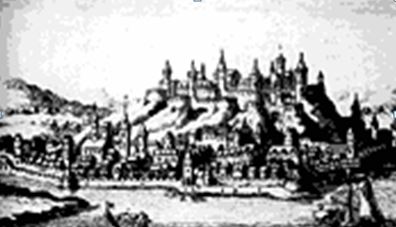 (Krystek , 2011)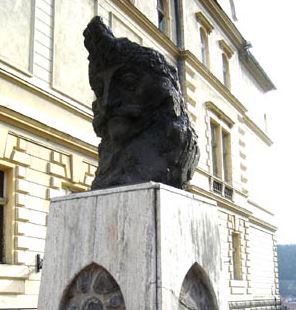
(Krystek , 2011)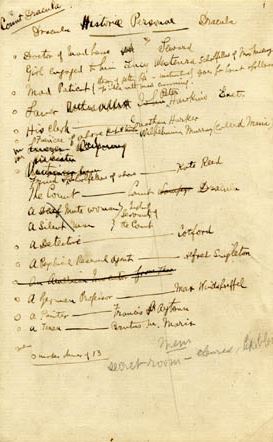
(Krystek , 2011)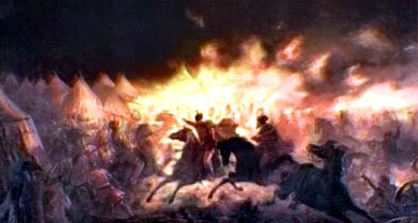
(Snell, Miniature of Vladislaus Dracula, 2014)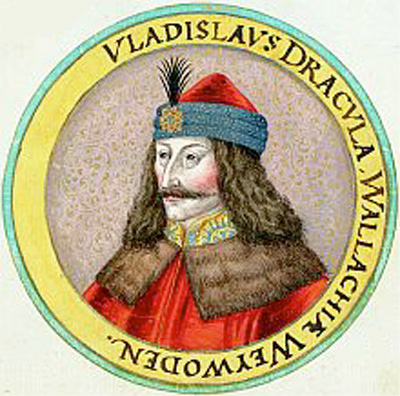 (Snell, Full-Length Portrait of Vlad Dracula, 2014)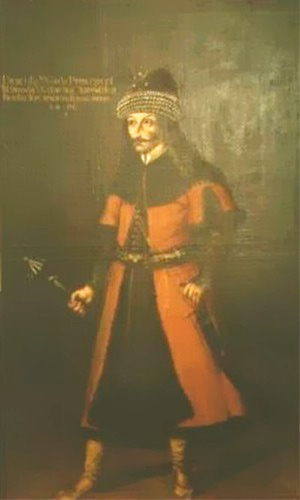 (Snell, Turkish Envoys, 2014)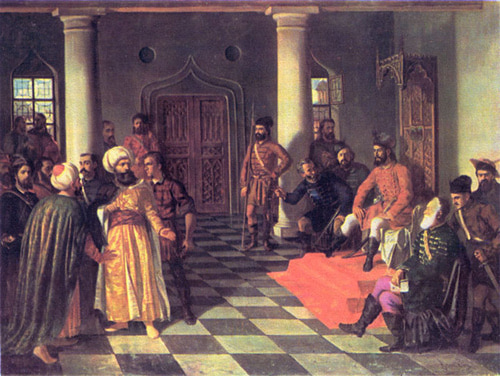 (Snell, Woodcut from a German Pamphlet, 2014)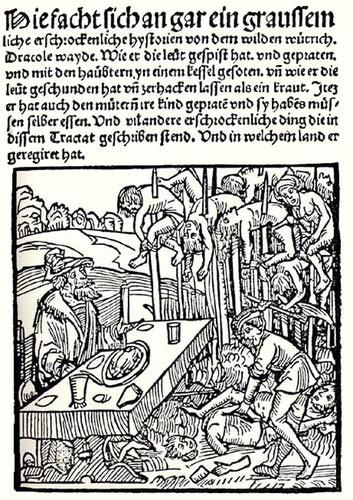 |
